VASER is a form of ultrasound assisted liposuction. Ultrasound energy helps prepare the fat tissue before removal. The aim is individually planned body contouring. Whether it is appropriate compared with another method depends on the findings and medical assessment.
Information published by Lipoaesthetic.com®.
Medical review: Uwe Wolfgang Petrus.
VASER® ultrasound-assisted-liposuction (UAL)
Belly, waist, hip, chest, flanks, back, upper arms
Planned individually according to treatment extent
According to the procedure and your health
Depends on treatment extent and activities
Depends on treatment extent and activities
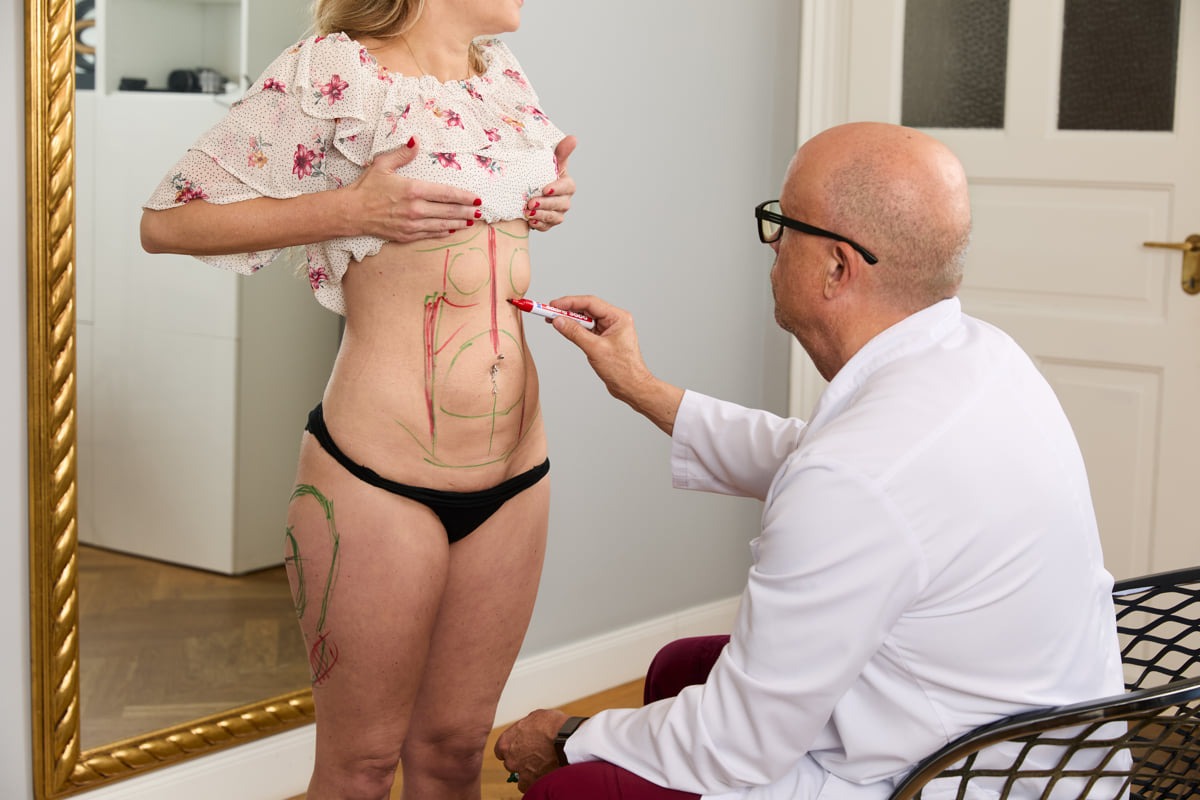
With a Vaser® treatment, the first step is to inject a special local anesthetic diluted in a saline solution into the area to be treated. This has an anesthetic effect and leads to a contraction of the local blood vessels. At the same time, the body volume temporarily increases at the injected areas. This has the advantage that fat cells can be removed more easily.
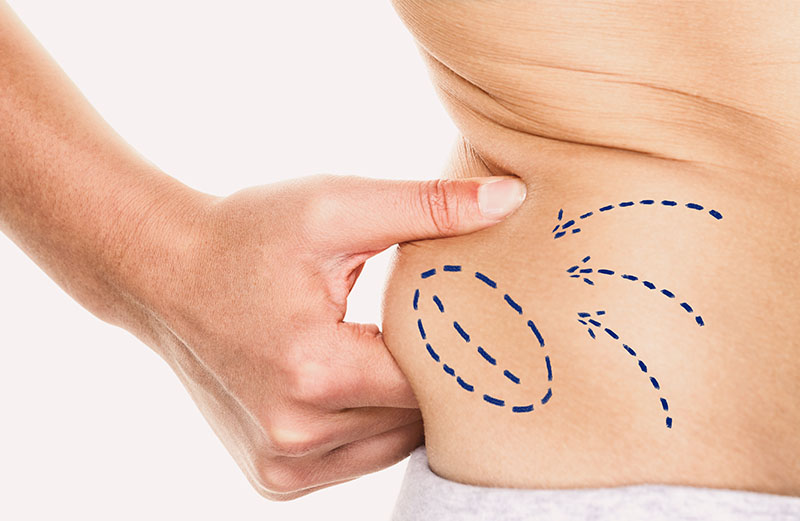
Subsequently, during a Vaser®lipo procedure, fine ultrasound probes are inserted into the tissue through minimal incisions. These probes emit ultrasound energy and detach the fat cells from their structure, while the surrounding tissue remains intact and is protected.
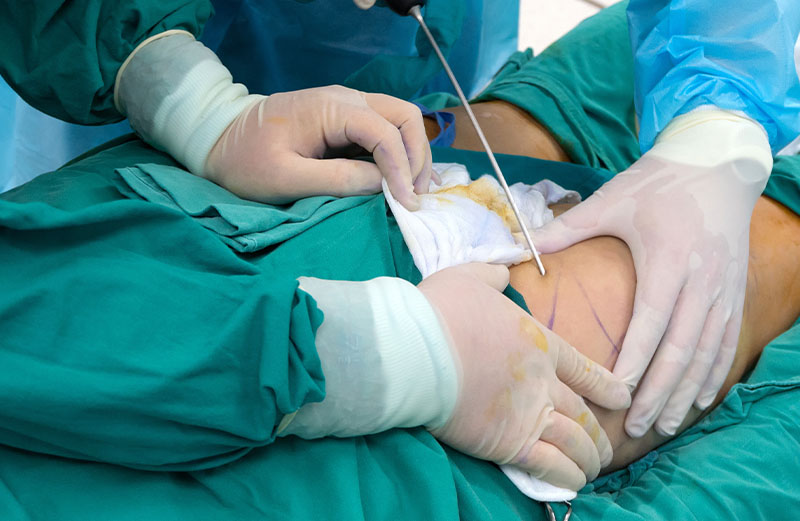
Next, with a Vaser®lipo treatment, the dissolved fat is removed with a special suction cannula. Thanks to the gentle process, the surrounding tissue remains largely intact.
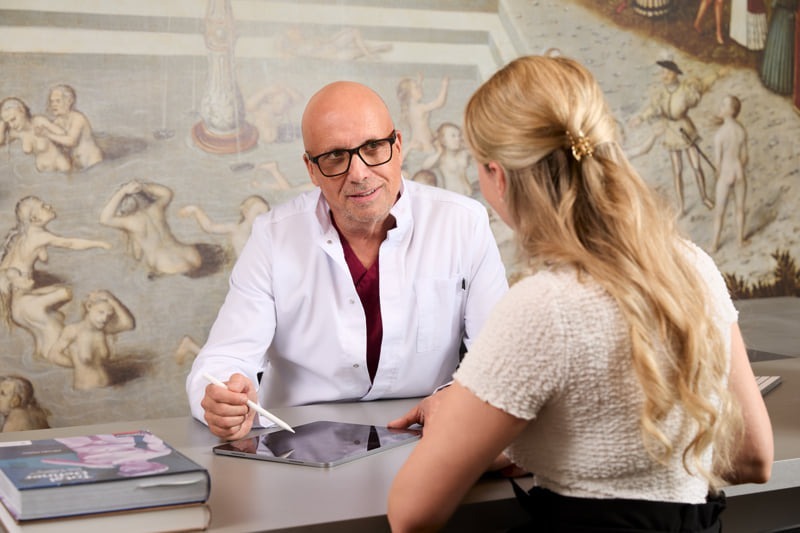
A particular skin tightening effect or a superior result cannot be promised for every patient.
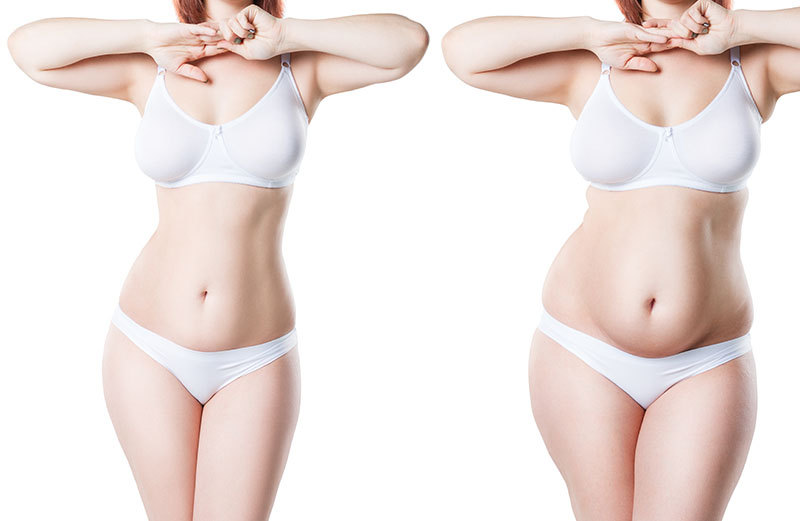
The procedure can still cause tissue injury. Risks include swelling, bruising, infection, altered sensation and contour irregularities; ultrasound assisted methods can also cause heat injury. Small access incisions may leave scars. A particular skin tightening effect or a superior result cannot be promised for every patient.
The aim is individually planned body contouring. Whether it is appropriate compared with another method depends on the findings and medical assessment.

A VASER®lipo operation is particularly useful if athletically active and nutrition-conscious patients suffer from genetically determined, therapy-resistant fat deposits and want to have these problem areas removed.
In particular, however, also patients who, in addition to therapy-resistant fat deposits, no longer have very tight skin and connective tissue conditions and want to avoid surgical skin tightening.

Smoking can cause the blood flow to the skin and connective tissue to deteriorate. This may lead to delayed wound healing.
Before the surgical procedure and 10 days after the procedure, patients should avoid smoking to ensure rapid and optimal wound healing.
In addition, patients should avoid taking blood-thinning medications (ASA – aspirin) and multivitamin preparations around 10 days before the operation.
If you regularly take medication, it is necessary to address them during the consultation to avoid complications after the procedure.
The appropriate anaesthetic depends on the procedure and your health. Treatment time and the return to work or exercise depend on factors including the extent of treatment and the demands of your activities. A short website summary cannot replace individual planning. Follow up appointments, compression garments and other measures are specified in your personal treatment plan.
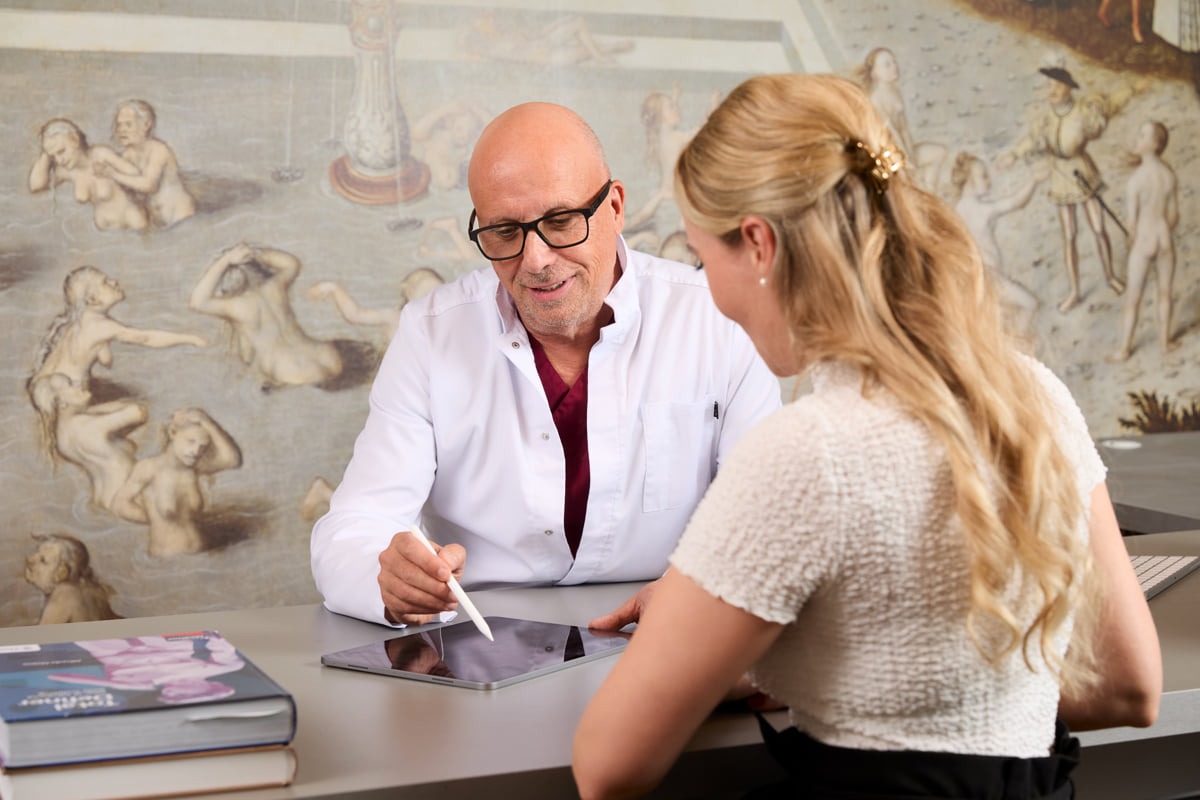
Those who pay attention to their weight and fitness are particularly bothered by certain fat deposits. Often it is the thighs, the streaky bacon or the “love handles” on the hips. Neither sport nor diets eliminate these…
mehr InfoLearn More
VASER is ultrasound assisted liposuction for body contouring. Suitability, expected benefit and possible risks are discussed individually with the treating doctor.
mehr InfoLearn More
Every man/woman has a six-pack or even a two-pack, depending on his or her training activity and genetic disposition, but this is often concealed by increased fat accumulation in the abdominal and flank area. With the V…
mehr InfoLearn More
The Renuvion® system, one of the most exciting advances in energy technology in the last 20 years, combines the unique properties of cold helium plasma with the efficiency of radio frequency energy. This combination ena…
mehr InfoLearn More
With the LEONARDO® Dual 45 diode laser system, we also have the latest innovation in laser technology for minimally invasive contour shaping in our portfolio: A laser medical procedure performed under local anesthesia i…
mehr InfoLearn More
The Cellfina® treatment is a clinically proven method to improve the appearance of cellulite.
This is achieved with a precise solution of individual connective tissue strands. The innovative method is minimally invasive…
A liposuction at Lipoaesthetic in Munich can be combined with a lipofilling in almost any way. Extracted fat from liposuction on the abdomen, hips or thighs can be used to model other parts of the body when using autolo…
mehr InfoLearn More
The Brazilian Butt Lift (BBL) is a combination of liposuction including body shaping and autologous fat transfer for volume therapy in the buttocks. The fat required is extracted with the gentle VASER ® Lipo method from…
mehr InfoLearn More
Lipedema is a painful fat distribution disorder occurring almost exclusively in women. Its course and treatment options require individual medical assessment.
mehr InfoLearn More
Have you already had liposuction elsewhere and are not satisfied with the result? Then we at Lipoaesthetic in Munich are the ideal contact for you. With LipoRepair we are able to fix small and large irregularities. It is…
mehr InfoLearn More
Are you tired, limp and feel no more energy in you? Do you need proteins and minerals for your sporting activities? Do you want more strength and endurance for your strenuous professional life? Do you want to lose more…
mehr InfoLearn More
Liposuction is a proven method for those aiming for targeted body contouring. Choosing the right specialist in Munich is crucial to achieve both the desired aesthetic goals and to ensure a safe treatment tailored to personal needs. In…
mehr InfoLearn More


Lipoaesthetic.com®
Kaiserplatz 12
D – 80803 München

info@lipoaesthetic.com
Telefon: +49 89 255 422 50
WhatsApp: +49 151 140 783 31




